How Dubai Shoppers Can Protect Handbags Using Museum Storage Standards
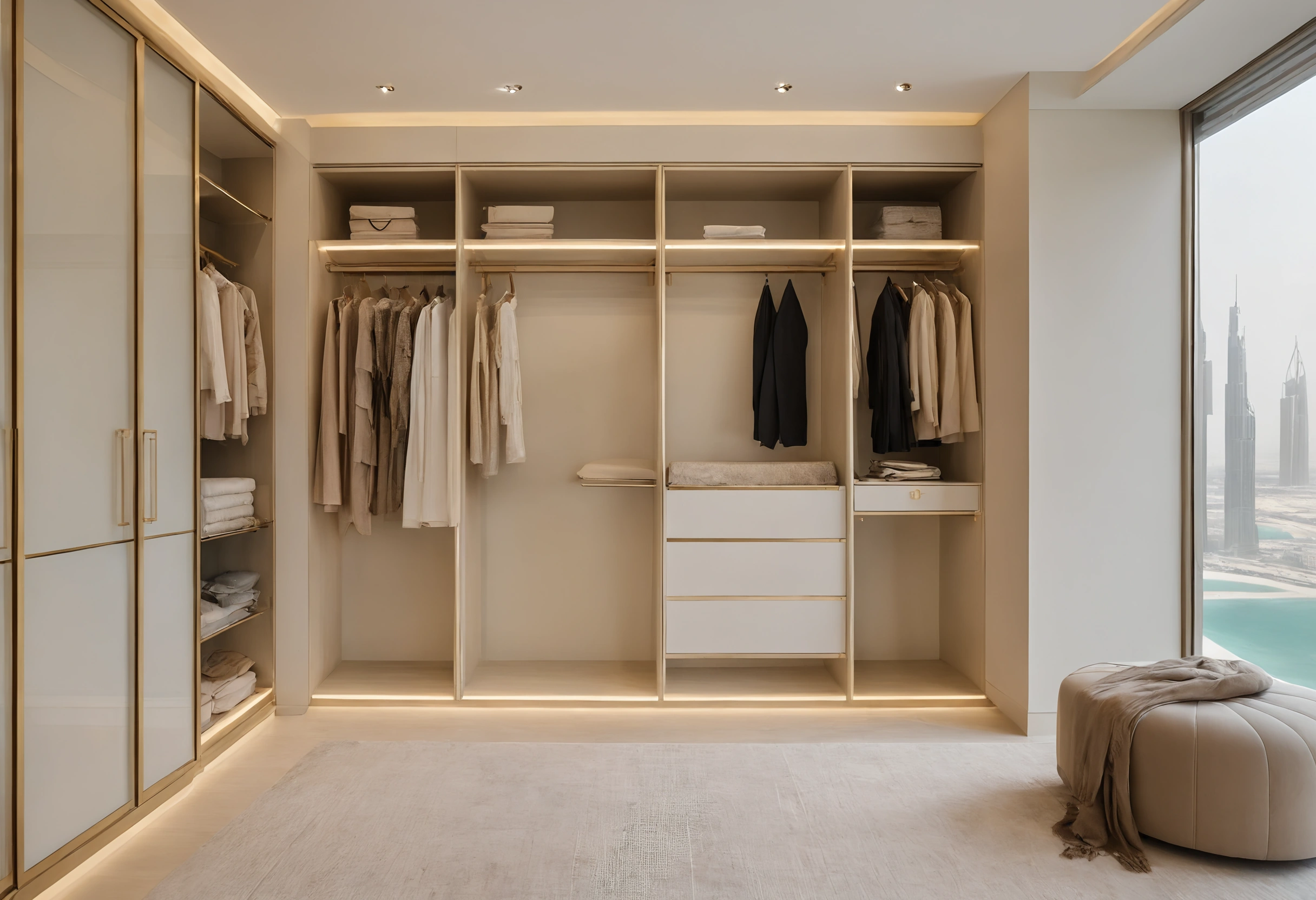
Solomia Home, a luxury furniture store Dubai with wardrobe and dressing-room systems from Italian makers, is an Italian furniture showroom whose online catalogue lists Flexform, B&B Italia, Boffi and Porada among other houses across bedroom, living and dining ranges. Shoppers planning the wardrobe itself can browse the Patchee look book and the Patchee blog before briefing a joiner.
Protecting structured bags and fine shoes in a Dubai apartment demands more than open shelving. The Canadian Conservation Institute and the United States National Park Service publish museum-level specifications for costume accessories and leather artefacts. Both documents serve as benchmarks rather than household rules, yet the parameters translate directly into a dressing-room brief. Shoppers who understand these thresholds can instruct a joiner or select a modular system that keeps humidity stable, limits light exposure and prevents physical deformation. The earlier Patchee article on dressing room humidity and handbag storage myths in the UAE checks common humidity myths; this guide adds the conservation figures for shelves, light and layout.
- Museum guidance recommends storing costume accessories at 45 to 55 per cent relative humidity with temperatures not exceeding 21 C.
- Relative humidity above 65 per cent encourages mould on skin products, while levels below 22 per cent cause permanent moisture loss and shrinkage.
- Shoes must stand side by side rather than stacked, and purses should lie flat, loosely filled with acid-free tissue, with handles straightened.
- Give the joiner a written sheet: humidity band, lux limit for shelf lighting, flat shelves for purses and a hygrometer you can read daily.
What humidity range protects leather and fabric accessories?
The Canadian Conservation Institute says most costume accessory materials store safely at 45 to 55 per cent relative humidity, with temperature not above 21 C (CCI Notes 13/12). The US National Park Service stabilises leather at 40 to 60 per cent (NPS Appendix S) and warns that fibres swell above 65 per cent and skin shrinks below 22 per cent.
The NPS handbook allows localised portable humidification or dehumidification to hold that 40 to 60 per cent band, so a dressing room specification can name a dehumidifier and a hygrometer as separate line items. The CCI figure of 45 to 55 per cent is the tighter target. Both documents describe museum collections, so treat them as a benchmark for the brief rather than a household rule.
How do glass fronts and lit shelves affect stored handbags?
Glass-front wardrobes expose bags to ambient light. CCI Notes 13/12 states that light levels should remain below 50 lux when accessories are exposed, and items should be stored in the dark where possible. Illuminated display shelves introduce both visible light and heat. The NPS handbook warns against proximity to heating registers, radiators, direct sunlight and exhibit lighting sources, all of which can damage leather over time.
A specification with glass doors should therefore state a lux limit for the shelf lighting and keep strips and bulbs clear of the leather. CCI Notes 13/12 allows shoes in a closed unit or on open shelving protected by dust covers, and keeps stored accessories in the dark where possible, so pieces not on display belong behind closed doors.
How should shoes and purses be arranged on shelves?
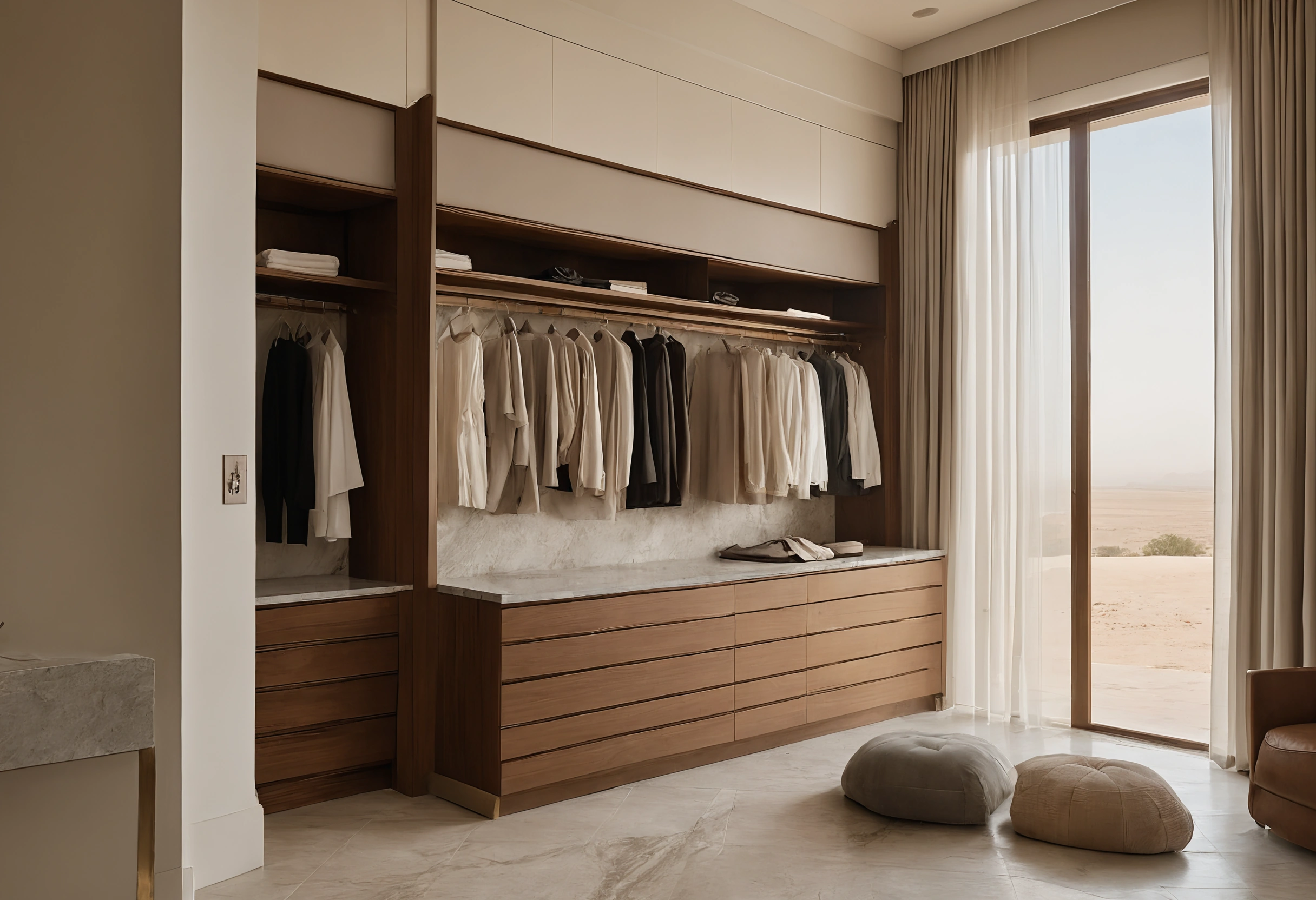
CCI Notes 13/12 says shoes stand side by side and are never stacked, because stacking can cause soiling, cracking of patent leather and deformation. Purses are filled loosely with acid-free tissue, stored flat, kept out of contact with other objects and have handles straightened. Measure the largest bag and the tallest shoe you own, then leave margin around each.
CCI Notes 13/12 also calls for an insect inspection of stored accessories at least every six months, so every shelf must be reachable. A flat shelf, a tray or a drawer from the island suits purses; the standard asks for unbuffered, acid-free tissue as the filling.
What should the wardrobe specification sheet say?
Hand the joiner one sheet that turns each museum figure into a line they can build and you can check. Use the tighter CCI numbers as the brief. Bags bought from the Patchee new arrivals page belong on the same sheet as older pieces.
| Item | Museum guidance | What to specify in the wardrobe | Source |
|---|---|---|---|
| Humidity | 45 to 55 per cent relative humidity; NPS allows 40 to 60 per cent | Dehumidifier and a separate hygrometer as named line items, target 45 to 55 per cent | CCI Notes 13/12, NPS |
| Mould and drying limits | Mould risk above 65 per cent; permanent shrinkage below 22 per cent | Act when the hygrometer leaves the 40 to 60 per cent band, well before these limits | NPS Appendix S |
| Daily swing | Temperature within 4 C and humidity within 5 per cent in a day; 25 C maximum | Keep the dressing-room air conditioning running when you travel | Western Australian Museum |
| Temperature | Not above 21 C for accessories; 18 to 20 C for leather | Place the wardrobe away from heat sources and windows | CCI Notes 8/2 |
| Light | 50 lux for exposed accessories and dyed leather; 150 lux for unpainted leather; stored in the dark | Lux limit for glass-door and shelf lighting; solid doors for pieces not on display | CCI Notes 8/2 |
| Shoes | Side by side, never stacked; closed unit or open shelf with dust covers | Single-depth shelves sized to the tallest pair | CCI Notes 13/12 |
| Purses | Flat, loosely filled with acid-free tissue, handles straightened | Flat drawers or trays; unbuffered acid-free tissue supplied | CCI Notes 13/12 |
| Inspection | Every six months for accessories; every three months in CCI Notes 8/2 | Reachable shelves so every piece can be checked for mould and insects | Western Australian Museum |
Dust is the last line on the sheet. CCI Notes 8/2 asks for polyethylene or cotton dust sheets or closed cabinets, and the Western Australian Museum asks for regular vacuuming of the storage area, so specify closed doors or covers rather than bare open shelving.