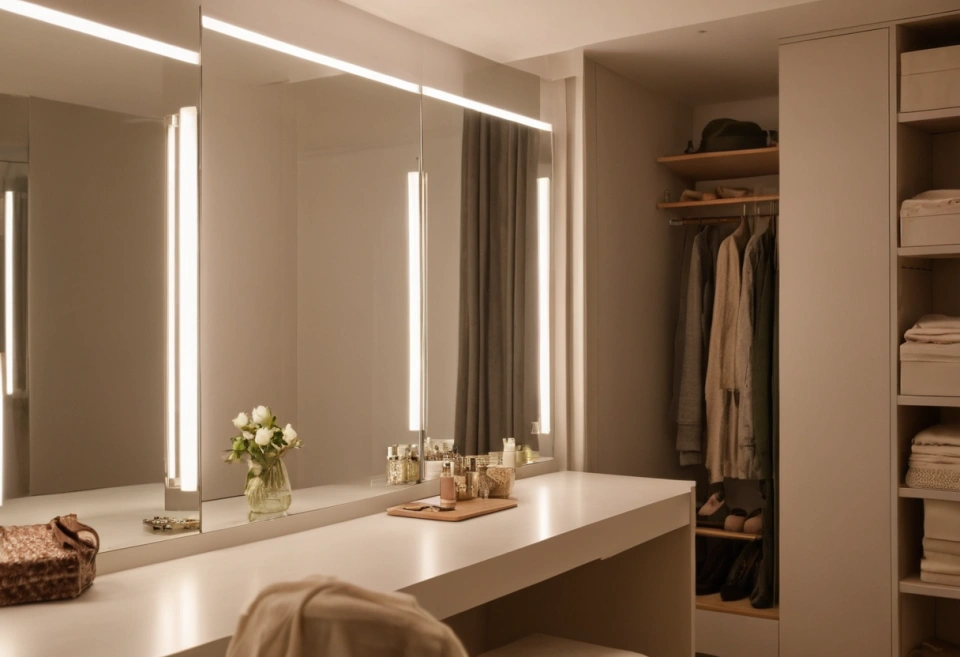
Lighting a dressing room so colours read true and shelves stay cool
A dressing room needs two kinds of light: one that tells the truth about colour, and one that leaves your clothes and leather alone. Here is how to arrange both.
Who this is for
If you are planning a dressing room, or rewiring one that has always made navy look black, this is for you. It covers the four decisions that matter most: a light source that renders colour honestly, shelf lighting cool enough to sit near leather, mirror light that flatters nobody and hides nothing, and sensors that behave themselves inside a closed cupboard. The aim is a room where you can dress accurately in the evening and store good bags without cooking them.
Colour rendering, and why your ceiling downlights are not enough
Colour rendering describes how faithfully a light source shows the colours of objects compared with daylight. It is expressed as a colour rendering index, and the higher the number, the closer the match. For a dressing room, ask for a high figure rather than accepting whatever came with the flat. Low rendering sources flatten reds, muddy browns and make similar greys look identical, which is exactly the mistake you discover outside.
Colour temperature is separate, and confusing the two causes most of the trouble. A very warm source can render colour beautifully and still cast everything in amber; a cool white source can look crisp and still be poor at reds. Aim for a neutral white, between the amber of an old filament bulb and the blue of an office panel, and keep every fitting in the room at the same temperature. Mixed temperatures make a shirt look different on the hanger than in your hand.
Direction matters as much as quality. Downlights in the ceiling light the tops of shoulders and the floor, leaving hanging clothes in their own shadow. Put light where the clothes are: a linear fitting along the front edge of a hanging rail, washing back into the garments, or adjustable spots angled into the wardrobe rather than straight down. Then check the room the way you use it. Hold a navy jacket and a black one side by side. Look at a burgundy bag against a brown one. If you cannot separate them, the light is lying to you.
Daylight remains the reference. In a UAE apartment the window light is strong and slightly cool for much of the day, and in a villa with deep reveals it can be softer than you expect. Where there is a window, position the mirror near it and use artificial light to fill in, not replace.
Shelf lighting that stays cool
LED strips are the obvious answer for shelves, usually described as cool running. That is relative. The diodes emit little heat forwards, but the strip and its driver produce warmth at the back, and a strip stuck directly onto a wooden shelf inside a closed cabinet will slowly warm the surface it is glued to. Leather does not enjoy that. Prolonged gentle warmth dries out finishes, stiffens handles and can lift the edge paint on a well used bag.
A few rules keep the arrangement safe:
- Mount every strip in an aluminium channel, which acts as a heatsink and spreads the warmth along its length instead of concentrating it.
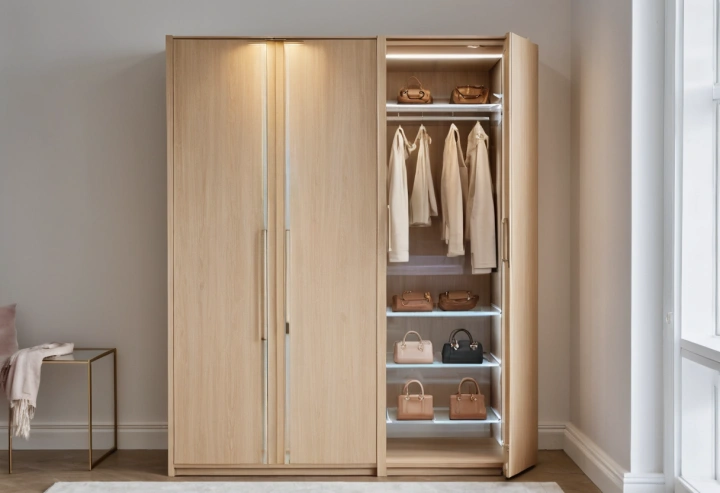
- Set the channel into the underside of the shelf above, at the front edge, so light falls onto the shelf below and never onto the goods directly beneath the fitting.
- Leave a hand’s width of clear air between any lit surface and the top of a bag, box or folded stack.
- Use a diffuser so you see an even line of light rather than bright dots reflected in hardware.
- Keep drivers outside the cabinetry, in a ventilated void or service space where they can be reached later without dismantling a wardrobe.
Low voltage strips fed from a remote driver are the sensible choice here, partly because the heat generating component sits elsewhere. Choose a modest output rather than the brightest strip available. A shelf needs enough light to identify contents and read colour, not enough to stage a photograph. Dimmable circuits let you run the room brighter while dressing and lower while storing.
If you are lighting open shelving used for display, remember that light is also exposure. Bags sitting under permanent illumination fade unevenly, particularly pale leathers and dyed suedes. This is one of several trade offs worth weighing before you commit to open storage, and we cover the rest in our guide to open shelving for shoulder bags. For pieces you rarely rotate, closed doors and light on demand are kinder.
Mirror lighting that tells the truth
A single fitting above the mirror is the common default and the worst option. It throws shadows into the eye sockets, under the nose and beneath the chin, so you read your face as tired and your colours as dull. What you want is light arriving at the face from both sides, roughly at eye level, from sources you cannot see directly.
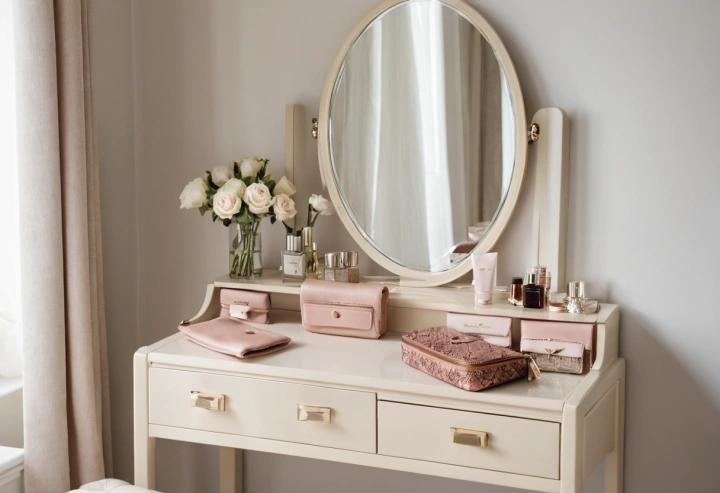
Vertical fittings either side of the mirror do this well. So does a backlit mirror with an even halo, provided it is bright enough to light the face rather than merely outline the glass. Frosted or opal diffusers matter: an exposed lamp visible in the mirror becomes a glare source and your eyes adjust to it, dimming everything else. Keep the mirror light at the same colour temperature and rendering quality as the wardrobe lighting, otherwise you will judge your face under one light and your outfit under another.
Position the mirror so you can step back from it. A full length view needs distance, and a mirror set into a narrow run of cabinetry gives you a cropped, close up version of yourself that hides hemlines and proportions. If space is tight, a mirror on the inside of a door or on a return wall often works better than one squeezed between hanging rails.
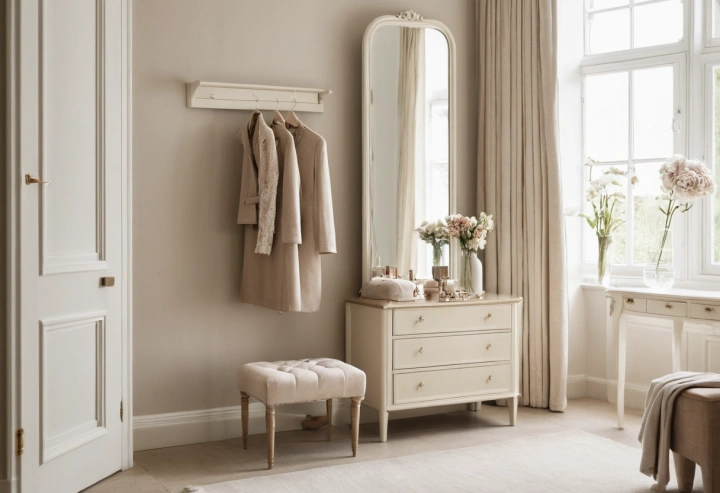
Add a separate, softer layer for the room itself. A dressing room lit only by task light feels like a corridor of bright rectangles. A gentle wash on the ceiling or a low fitting near the seating makes the space usable for longer than a quick change.
Sensors in cupboards, and the ones that misbehave
Automatic switching is useful in a dressing room, because your hands are usually full. The question is which trigger.
Passive infrared sensors detect movement of warmth, which means they work well in a room where a person walks in, and poorly inside a cupboard where nothing moves except a hand. They also time out. Stand still while deciding between two belts and the light goes off, leaving you waving an arm at a wardrobe.
Door triggered switches are the better answer for enclosed storage. A simple plunger or magnetic contact turns the circuit on when the door opens and off when it closes, with no timing to argue with. Fit them to wardrobes with doors, to bag cabinets and to drawer banks. For drawers, a switch at the back of the carcass is tidier than anything visible.
A short list of things to specify before the electrician arrives:
- Door contacts on all closed storage, with the wiring routed so a hinge adjustment cannot pinch it.
- A manual override or a plain wall switch for the main room light, so a failed sensor never leaves you in the dark.
- Occupancy sensing only where the room is genuinely walk in, with a generous timeout.
- Drivers and any transformers accessible without removing fixed panels.
Avoid sensors that stay partly live and glow faintly all night inside a cabinet holding leather. Continuous low light is still light, and still exposure over months.
Heat, dust and the storage side of the decision
Lighting sits inside a larger climate problem. In this region the risk to stored leather is rarely damp; it is warmth, dryness and sunlight. A west facing dressing room can gain considerable heat through the afternoon, and a sealed cabinet with lit shelves adds to it. Sheer curtains or solar film on the glass, doors kept shut during the hottest hours, and lighting that runs only when needed will do more for a collection than any product applied to the hide.
Give bags room to breathe rather than packing them tightly under a lit shelf, and keep them out of the direct path of any fitting. Our fuller guide to storing a handbag collection at home covers stuffing, dust bags and spacing in detail; the lighting decisions above should be made alongside those, not afterwards.
Your next step
Before anyone wires anything, stand in the room after dark with the current lights on and hold up three things you find hard to tell apart: two dark neutrals, two similar browns, and something with a red undertone. Note what fails. Then take that note to your electrician and ask for three specifics: a high colour rendering source at a single agreed colour temperature throughout, strips in aluminium channels with drivers mounted outside the cabinetry, and door contacts rather than motion sensors on every closed cupboard. Those three sentences will resolve most of what goes wrong in dressing rooms here, and they cost far less to agree now than to correct once the joinery is fixed.
- Words
- Rail & Shelf editors
- Published
- Section
- Dressing Rooms
- Standards
- Editorial policy · Corrections