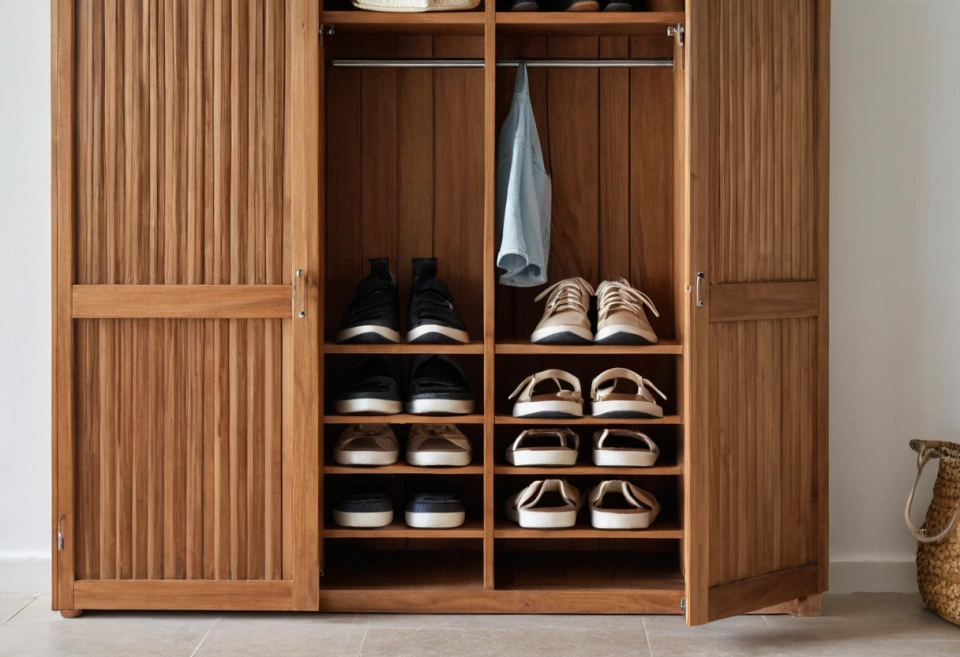
Shoe storage by the door that keeps UAE sand out of the home
Sand, heat and humidity make the entry the hardest-working corner of a UAE home. A little planning keeps shoes aired, floors clean and the rest of the house calm.
This guide is for anyone whose front door opens onto paving, sand or a dusty courtyard, which in the UAE is nearly everyone. It covers how to store shoes at the entry so they air properly in the heat, how to stop grit travelling from the doorstep to the bedroom, and how to arrange sandals and closed shoes so each gets what it needs. The aim is a small zone that works every day without fuss.
Why the entry deserves its own plan
In a hot, dusty climate the doorway is a filter. Every arrival brings fine sand on soles, in seams and inside shoes themselves, and coastal humidity means feet sweat more than the shoes can dry between wears. Left in a sealed cupboard, a pair worn daily never quite dries, and that is where odour and stiff, salt-marked leather begin. Left loose on the floor, shoes shed grit across the entry and it travels through the home on socks and slippers.
The fix is not elaborate. It rests on three things: airflow around the shoes, a deliberate stopping point for dirt, and a routine light enough that everyone in the household actually follows it. Apartments and villas differ in space, not in principle. A villa porch can hold a full cabinet and a bench; an apartment lobby might manage a slim tilt-out unit and two good mats. Both can work.
Choosing a cabinet that breathes
The single most useful feature in a shoe cabinet here is ventilation. Slatted doors, louvred panels, open-backed shelving or mesh inserts all allow air to move through the cabinet, so shoes dry overnight rather than stewing. A solid, sealed box is the wrong choice for daily footwear in this climate, however tidy it looks.
A few practical points when choosing or adapting a unit:
- Slats or louvres on the doors, ideally with gaps at the back or sides too, so air passes through rather than pooling.
- Adjustable shelves, because sandals need very little height and high-tops or boots need much more; fixed spacing wastes half the cabinet.
- A wipeable base or removable liner trays, since sand will collect inside no matter how careful you are, and you want to lift it out easily.
- Doors that close fully, keeping the visual clutter down and the dust on the shoes rather than on everything nearby.
Depth matters less than people expect. Most shoes fit comfortably in a cabinet about a hand’s width deeper than the longest pair laid heel to wall. Tilt-out designs suit narrow apartment halls because they use very little floor depth, though check that the tilted compartments still allow some airflow; some are effectively sealed buckets. If a cabinet has a solid back, leaving it a finger’s width off the wall helps air circulate behind it.
Keep the cabinet out of direct sun even if the entry is bright. Afternoon sun through a glass door will fade leather and dry out adhesives over time. A shaded spot along the same wall is almost always available.
Sandals and closed shoes live differently
Sandals, slides and espadrilles are dry, light and forgiving. Closed shoes, trainers, loafers and anything worn with socks hold moisture and need recovery time. Storing them mixed together means a damp trainer resting against a dry leather sandal, which does neither any favours.
Give each family its own shelf or zone. Sandals stack neatly and can share a shallow shelf near the top, where they are easy to grab on the way out. Closed shoes belong on shelves with more clearance and more air, and pairs worn on consecutive days benefit from being rotated: wear one pair, let it rest a full day in the ventilated cabinet, then wear it again. Rotation alone prevents most odour problems, no sprays required.
Shoes that arrive home genuinely wet, from a poolside walk or an unexpected splash, should stand open in the shade until dry before going into the cabinet. Never seal damp shoes away, and never dry them with heat. Leather sandals appreciate the same treatment as any good leather goods: shade, air and patience. If you keep nicer leather pieces elsewhere in the home, the principles in the complete guide to storing a handbag collection apply here too, just with lower stakes and more sand.
Dust the shoes themselves before they go in. A quick tap of soles together outside, then a brush of the uppers with a dry cloth or soft brush at the cabinet, removes most of what would otherwise settle inside the unit. Keep that brush in the cabinet’s bottom compartment so the habit has a home.
The mat routine that does the heavy lifting
Mats are the cheapest, most effective part of this whole system, and the trick is using two kinds in sequence. Outside the door, a coarse scraper mat, coir or rough rubber, catches loose sand from soles. Inside, an absorbent, low-pile mat catches the fine remainder and any moisture. One mat alone always underperforms; the pair works because they do different jobs.
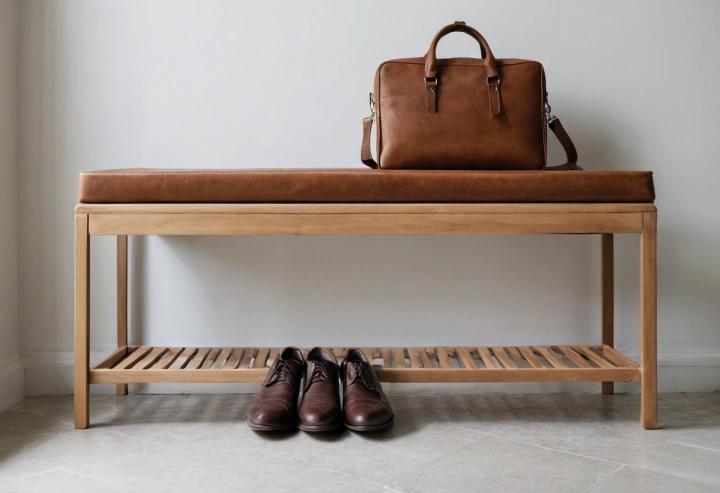
Make the routine visible and easy. Shoes come off at the mat, soles get a scrape outside and a press inside, then shoes go straight into the cabinet rather than onto the floor. In a villa, a bench beside the cabinet makes this effortless, especially for children and older residents. In an apartment, the edge of the cabinet itself can serve if it is sturdy and flat.
The maintenance rhythm is simple. Shake the outdoor mat over the garden or balcony every few days, vacuum the indoor mat with the weekly floor clean, and swap or wash both when they stop looking fresh. In shamal season, when dust hangs in the air for days, expect to shake the mat daily. A mat that is saturated with sand stops catching anything and starts redistributing it.
If the household includes indoor slippers or house sandals, keep them on the inside of the mat line only. That single boundary, outdoor shoes never cross the inner mat, is what actually keeps the bedrooms and living areas grit-free. Everything else in this article supports that one rule.
Keeping the cabinet and the entry honest
Even a well-run shoe station accumulates sand inside the cabinet, because shoes carry it in their treads. Once a week, lift the shoes out onto the mat, wipe or vacuum the shelf bases, and put everything back. It takes minutes and it stops the cabinet becoming a slow-release sand dispenser every time a door opens.
While the shelves are empty, glance over the pairs. Salt marks on leather from sweaty days wipe away with a barely damp cloth followed by a dry one. Soles packed with grit can be picked clear with an old brush. Shoes nobody has worn in months should migrate out of the entry entirely; the door zone is prime territory and belongs to the pairs in active use. Occasional shoes, formal pairs and off-season boots can live in the wardrobe, stored with the same care you would give tote bags and other shaped pieces: clean, dry, lightly filled and out of the sun.
Odour, if it appears, is almost always a drying problem rather than a cleaning problem. Check that the cabinet vents are not blocked by boxes or bags, that damp shoes are not being shut away, and that daily pairs are getting a rest day. A small open dish of bicarbonate of soda on a lower shelf absorbs lingering smells and costs nothing; refresh it when you do the weekly wipe.
One more habit worth adopting: the entry cabinet should hold shoes only. It is tempting to let it become the drop zone for deliveries, sports kit and the bag you carried all day, but every extra object blocks airflow and buries the shoe routine. Daily carry deserves its own landing place, as covered in the hallway station for daily carry, a hook or shelf a step away from the shoes.
Start with one shelf this week
You do not need a new cabinet to begin. This week, empty whatever currently holds the shoes by your door. Wipe it out. Put back only the pairs worn in the last fortnight, sandals on one shelf and closed shoes on another, with space around each pair for air. Add a coarse mat outside and an absorbent one inside if they are missing. Move the rest to the wardrobe.
Live with that for a couple of weeks and notice what the household actually does: which shelf everyone reaches for, where shoes pile up despite the system, whether the mats get used. Then, if an upgrade is warranted, choose a ventilated cabinet sized to the real rotation rather than the imagined one, slatted doors, adjustable shelves, wipeable base. The best entry setup is not the largest or the smartest. It is the one that quietly catches the sand, airs the shoes and asks almost nothing of you in return.
- Words
- Rail & Shelf editors
- Published
- Section
- Entry & Everyday
- Standards
- Editorial policy · Corrections