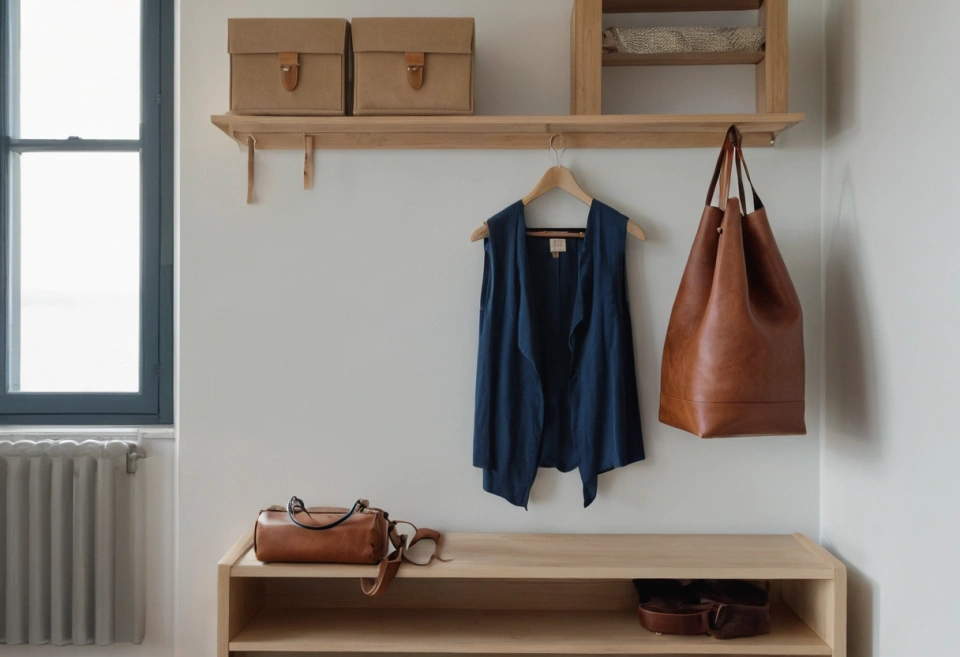
Mould season care for a leather shoulder bag on the coast
Coastal humidity finds leather before anything else in the wardrobe. Here is how to keep a shoulder bag dry, aired and sound from early summer until the weather breaks.
This is for anyone keeping a leather shoulder bag in a coastal flat or villa, where the air turns heavy for months and cupboards stay shut against the dust. It covers the routine that prevents mould, what airing achieves, where silica gel helps and where it quietly fails, how to dry a closed wardrobe, and what to do when a pale bloom appears anyway.
Why the coast is hard on a shoulder bag
Mould needs three things: moisture, still air and something to eat. Leather supplies the last generously. It is porous, holds oils and dressings from the tannery, and collects skin oils and hand cream along the flap edge and the top of the strap where your hand travels. Add a humid evening and a wardrobe unopened since Tuesday, and you have assembled the whole recipe on one shelf.
A shoulder bag is more exposed than most of its neighbours. The strap folds back on itself and traps a damp crease. The gussets concertina inward and never see light. The underside sits flat against a shelf, so any moisture settling there has nowhere to go. And because it is the bag you reach for daily, it comes home warm from the car, slightly damp from your shoulder, and goes straight into a dark cupboard holding both.
The fix is unglamorous: keep the air moving, keep the leather dry, stop feeding the mould. Everything below is a variation on those three.
Airing, done properly
Airing is not the same as putting the bag outside. On the coast, outdoor air in the humid months carries more water than the air inside a conditioned flat, so a balcony session can leave the leather wetter than it started. Balconies also bring heat and direct sun, which fade colour and stiffen leather, covered in more depth in our guide to leather care at home in the UAE climate.
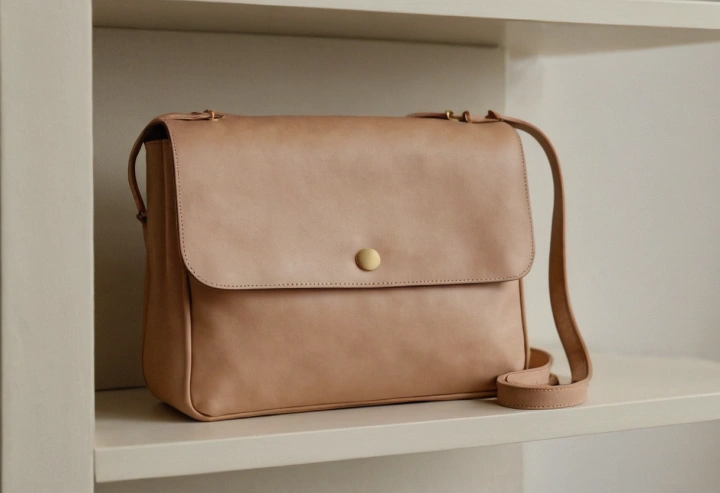
Air indoors instead. Choose a room where the air conditioning runs, set the bag on a clean towel on a table away from the vent, open the flap, pull the lining out if it lifts, and unclip or unbuckle the strap so it lies flat rather than coiled. Give it a few hours, ideally overnight, once every week or two through the worst of the season. Turn it over halfway so the base gets its share.
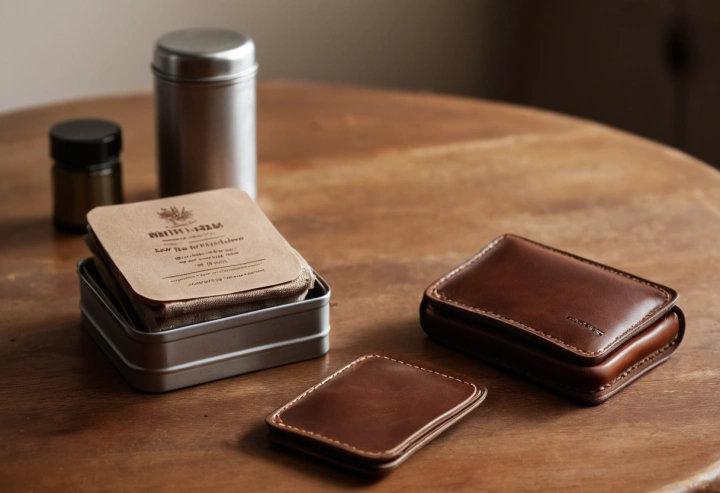
Before it goes back, wipe the contact points with a dry, soft cloth: the strap where it meets your shoulder, the flap edge, the zip pull, the feet. This takes less time than reading about it and removes most of what mould would live on. Do not oil or condition a clammy bag. Conditioner seals the surface, and sealing moisture in is precisely the wrong move. Wait until the leather feels dry and cool to the back of your hand.
Silica gel and its limits
Silica gel is useful and widely oversold. A sachet adsorbs moisture from the air immediately around it, which makes it good at polishing the atmosphere inside a small, genuinely closed space: a lidded box, a zipped dust bag with the bag inside, a drawer that stays shut. It does nothing for the humidity of a room, and cannot rescue a wardrobe whose doors open several times a day.
Three practical limits worth knowing:
- It saturates. Once full, a sachet is inert decoration, and in a sealed space a saturated one may as well not be there. Replace or recharge on a schedule rather than by faith.
- Indicating beads change colour when spent; plain white ones give no clue. If yours are plain, write the date on the box they came from and work to intervals of a few weeks in high season.
- Loose beads and leather do not mix. Keep sachets in a small dish or cotton pouch on the shelf, not tucked into a pocket where they press a hard lump into the panel.
Never place a sachet against suede or nubuck, and never rely on gel alone in a wardrobe that already smells faintly of cellar. Gel maintains a dry space. It does not create one.
Drying out a closed wardrobe
A built-in wardrobe on an internal wall, with solid doors and no ventilation gap, is the hardest case in the flat. Two approaches work, and they combine well.
The first is a small dehumidifier box with a calcium chloride refill, sitting on the wardrobe floor or a low shelf, collecting brine in its lower chamber. These are cheap, silent and effective in a genuinely enclosed volume. Check the chamber weekly. When the crystals have gone and the liquid stops rising, the box is finished: swap the refill rather than leaving an exhausted tub in place for a season. Keep it upright, away from leather, and empty the collected liquid down a drain, not onto anything you value.
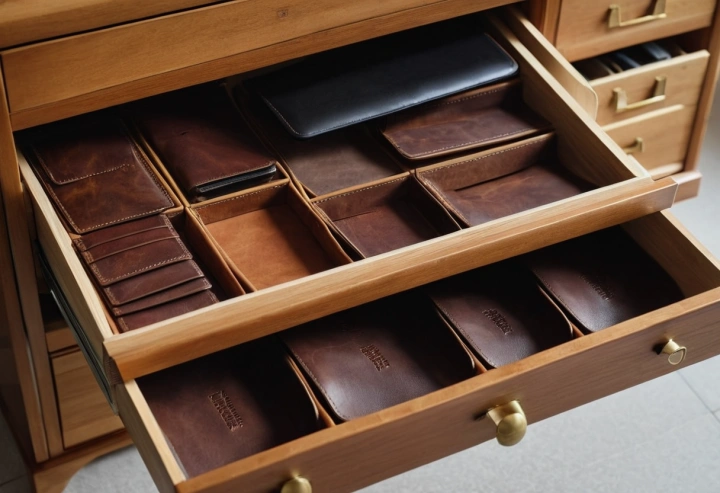
The second is airflow. Leave a hand’s width between bags and between bags and the back panel. Do not stack them. Raise the shelf contents slightly on a slatted tray or folded cotton sheet so air can pass underneath. Open the doors fully for a while on days when the flat is conditioned and the outdoor air is drier, usually the cooler months or a genuinely dry spell. If the wardrobe has a light fitting, check whether it warms the interior; gentle warmth helps, a hot bulb near leather does not.
Electric mini dehumidifiers work on the same principle as the boxes but need power and somewhere for the water to go, which most wardrobes lack. If you use one, run it in the dressing room with the doors open rather than sealed inside a cupboard. For shelving, spacing and where bags should live in the first place, see the complete guide to storing a handbag collection at home.
When a bloom appears
First identify what you are looking at. Mould is powdery or faintly fuzzy, grey, white or greenish, sits on the surface, often follows a seam or fold, and smells musty. A waxy white haze appearing evenly across smooth leather, especially after a temperature change, is more likely spew: fats and oils migrating out of the leather. Spew buffs away with a dry cloth and warmth from your hand, and does not smell. Mould needs treating.
For mould, take the bag outside or into a bathroom with the extractor running, so you are not brushing spores around your bedroom. Empty it completely. Brush the loose growth off with a soft dry brush or cloth, wiping rather than scrubbing, and discard the cloth. Then wipe the affected area with a cloth barely dampened with clean water, wrung until almost dry. Test any cleaner on the base or an inside edge first. Suede, nubuck and unfinished vegetable-tanned leather should only ever be brushed dry; water marks them permanently.
Dry the bag slowly indoors, flap open, stuffed loosely with plain white paper to hold its shape, away from sun and heaters. No hairdryers, no direct vent blast. Once properly dry, a light conditioner on smooth leather restores what the wipe removed. Then treat the dust bag too, or wash it if cotton, because putting a cleaned bag into a contaminated dust bag simply restarts the problem. Our notes on caring for canvas and cotton totes cover washing fabric safely.
If the bloom returns within a few weeks, the bag is not the problem. The shelf, the wall behind it or the wardrobe itself is damp, and no amount of wiping will outrun that.
Your next step this week
Open the wardrobe you use least and smell it. Mustiness is the earliest signal, well before anything visible. Take every bag out, wipe the shelves with a barely damp cloth and let them dry fully, then air each bag indoors overnight with its flap open and strap unclipped. Put a fresh dehumidifier box on the wardrobe floor, note the date, and check it weekly. Set a recurring reminder for a fortnightly airing through the humid months. That single habit prevents nearly everything described above, and costs nothing but a little attention.
- Words
- Rail & Shelf editors
- Published
- Section
- Leather & Care
- Standards
- Editorial policy · Corrections