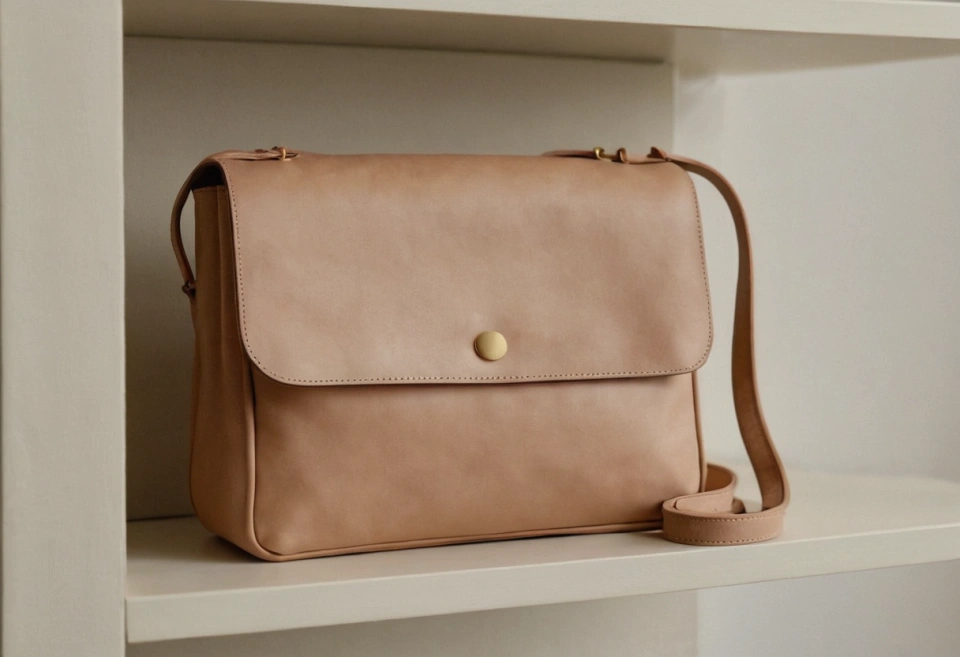
Keeping structured bags in shape on a shelf at home
A boxy bag holds its shape through what happens between wears. Filling it properly, closing the flap and giving the corners room do more than any product bought afterwards.
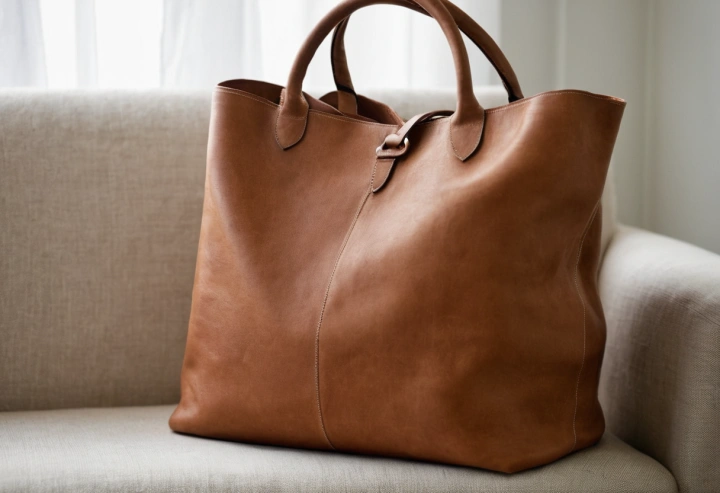
This is for anyone with a square crossbody, a boxy top-handle or a small trunk-shaped bag sitting on a wardrobe shelf, wondering why the sides have begun to bow. Structured leather keeps its geometry only while something supports it from inside and nothing leans on it from outside. What follows is the filling, the wrapping, the flap position and the small habits that keep corners sharp.
Why a boxy bag loses its shape
A structured bag is a set of flat panels joined at seams, usually stiffened by an internal layer bonded between the leather and the lining. That stiffener does the work of holding a wall upright. Once it creases, it stays creased, and no amount of surface conditioning brings the fold back.
Three things cause the crease. Weight from above, when bags are stacked or a heavier tote is parked on top. Pressure from the side, when a row of bags is pushed tight into a cubby so each one takes the load of its neighbour. And emptiness, which sounds harmless but leaves the panels unsupported while the leather relaxes in a warm room. In an air-conditioned apartment the air is dry, and dry leather holds a bend more readily than supple leather. A bag left slumped for a season comes out with a soft diagonal across the front that reads as age rather than use.
The square crossbody suffers most because its proportions are unforgiving. A wide, shallow body has a large flat front and very little depth to brace it, so a modest push shows as a visible dent.
Filling: acid-free paper, pillows and inserts
The aim is to support the panels, not to stretch them. Overfilling damages a bag as much as leaving it empty, because it opens the seams slightly and puts the stitching under permanent tension.
Acid-free tissue is the standard choice for good reason. Ordinary paper and newsprint carry acids that migrate into leather and lining over time, and printing ink transfers onto pale linings in warm conditions. Acid-free tissue is unbuffered or buffered, and either suits leather; the point is that it is chemically stable and will not yellow the interior. Crumple it loosely into soft balls and build up the volume gradually, then finish with a flat sheet against each face so the front and back read smooth. Fill the base first, since that is where sag begins.
A bag pillow does the same job with less fuss. Choose undyed cotton or a plain pale fabric, washed before first use so no dye sits against the lining, and stuffed lightly enough to squash under a palm. A pillow should be a size smaller than the bag’s interior, never a tight fit. For a shallow square crossbody, a folded piece of washed cotton flannel often works better than a bought insert, because you can control the thickness precisely.
Rigid inserts and moulded shapers deserve suspicion. They hold one shape, and if that shape is not quite your bag’s shape they press a new line into the leather exactly where the insert ends. If you use one, check that its edges fall well inside the bag’s seams.
A few things to keep out of the interior:
- Newspaper, receipts, printed paper and coloured tissue, all of which can transfer.
- Bubble wrap and plastic bags used as stuffing, which trap moisture against the lining.
- The original cardboard box used as a filler, since board flexes and its edges dig in.
- Anything scented, including sachets and dried lavender, whose oils settle into leather.
Dust bags matter too. Use the breathable cotton one that came with the bag, or plain cotton, and skip anything with a plastic coating. For the wider picture of shelving, spacing and rotation, our guide to storing a handbag collection at home covers the layout side of this.
Plastic wrap and other bad ideas
Wrapping a bag in cling film feels protective. It is the opposite. Leather moves moisture in and out with the room around it, and a sealed plastic layer stops that exchange. Any humidity present when you wrapped it stays there, which is how a faint musty smell and small pale blooms appear on a bag that was clean when it went away. In coastal months, with humid air outside and cool dry air indoors, that trapped pocket is exactly the condition mould wants.
There is a second problem specific to structured bags. Plasticisers in soft plastics can migrate into finishes, and the first place this shows is the edge paint and any coated trim, which turns tacky and picks up lint. Once edge paint goes sticky it cannot be cleaned back to its original state; it needs redoing by someone who repairs bags.
Vacuum bags are worse still, because they combine the sealed environment with sustained pressure on the panels. Airtight storage boxes have the same flaw as wrap unless the bag is genuinely dry and the box is opened now and then. Clear lidded boxes with a loose lid, or a cotton dust bag inside a box with the lid slightly ajar, give you visibility without the seal.
Silica gel is fine in the cupboard, not inside the bag against the lining, and it needs replacing once it has done its work. During the muggy part of the year, airing the shelf and keeping air moving matters more than any absorbent. Our piece on looking after a shoulder bag through the humid coastal months goes into mould prevention in more detail.
Flaps closed, straps in, hardware quiet
Store a flap bag with the flap down and the closure fastened, but not strained. An open flap left standing up for months takes a set at the hinge line, and that crease sits right where the eye lands. Fastening a turn lock or magnetic closure keeps the flap lying in the position it was designed to sit in, which also stops the front panel curling outward.
If the closure only meets when the bag is stuffed full, you have overfilled it. Ease the filling out until the lock closes without pulling.
Straps belong inside the bag, coiled loosely rather than folded, with any chain in its own small cotton pouch so links do not press marks into the leather. A long crossbody strap left hanging over the edge of a shelf will pull at its attachment rings under its own weight, and the metal will burnish a pale patch wherever it rests against the body. Buckles should be done up on a middle hole so the strap keeps a gentle curve instead of a sharp fold.
Handles stand upright or lie in their natural direction. Do not tuck them under the bag or bend them flat to make the shelf tidier.
Edge paint and corner wear
Edge paint is the thin coloured seal along every cut edge: the flap perimeter, the strap sides, the gusset seams. It keeps the layers of leather bonded and stops the edge fraying. Heat softens it, dryness makes it brittle, and friction wears it through. A car interior or a balcony in the warmer months will do more damage in an afternoon than a year on a shelf, so keep bags out of both. Our article on leather care in the UAE climate covers heat and air-conditioned dryness properly.
Corners fail differently. On a boxy bag the corner is where several panels meet, so it stands slightly proud and takes every knock. Wear shows first as a shine, then as a lightening of colour, then as exposed fibres. Almost all of it comes from rubbing rather than from age: sliding the bag along a shelf, setting it on a rough stone floor, letting it brush a door frame on the way out.
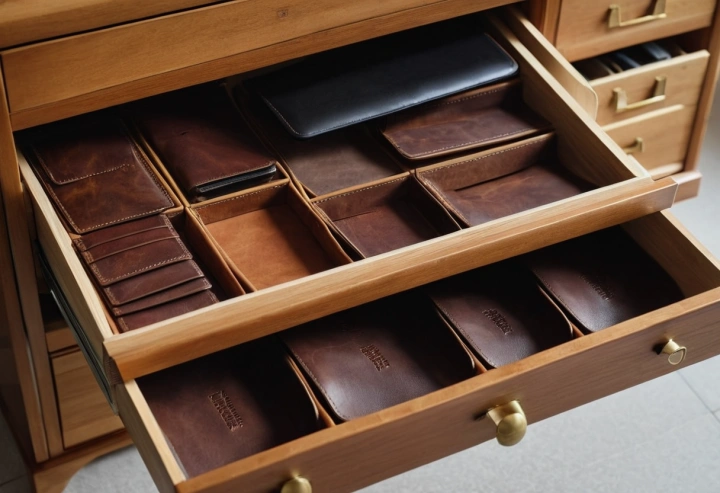
So lift rather than drag. Give each bag a hand’s width of clear space on either side, and never let two bags touch, because hardware on one will scratch the other. Line shelves with plain linen or undyed cotton, which is smoother than bare board and easier to wash. Keep the base of the bag off anything gritty, and stand it on its feet if it has them.
Check the corners and edges when you rotate bags, which is a good moment anyway. Catching a dull edge early means a repair is straightforward; catching it once the leather core is exposed means rebuilding the corner.
Where to start this week
Take every structured bag off the shelf and empty it completely, including the forgotten receipts and the old tissue. Look at each front panel in daylight from the side, so any bow or crease shows. Then refill with acid-free tissue or a washed cotton pillow, close the flap, coil the strap inside and put the bag back with space around it. Remove any plastic wrap you find, and let those bags air on a towel for a day before they are stored again.
If a bag already has a set crease, fill it a little more fully than usual and leave it for a few weeks in a cool room, checking progress rather than expecting a cure. Some folds ease. Others are permanent, and knowing which is which is the useful part.
- Words
- Rail & Shelf editors
- Published
- Section
- Leather & Care
- Standards
- Editorial policy · Corrections