Leather tote care at home, from lining to darkened handles
The outside of a leather tote gets all the attention. The lining, the handle edges and the months spent in a cupboard decide how long it lasts.
This is for anyone who owns a good leather tote and keeps it in a UAE apartment or villa: the woman who carries one daily for work, the person with two or three sitting in a wardrobe waiting for cooler months, and anyone who has noticed the handles going dark and wondered whether that is damage. It covers cleaning inside and out, what to do about handle patina, when conditioning helps and when it does not, rain and spills, and putting a tote away between seasons without losing its shape.
Start with an empty bag, not a cloth
Most tote problems begin inside. A leaking pen, a loose lipstick, sand from a beach weekend, receipts folded into corners, a water bottle that sweated through a hot afternoon. None of it shows from the outside, and all of it eventually works through to the leather.
Turn the bag upside down over a bin and shake it. Then take everything out, including whatever lives in the base pockets. Lift crumbs and grit with a lint roller or masking tape wrapped around your fingers, sticky side out. A soft brush reaches the seams where sand collects. Do this before any moisture goes near the bag, because damp grit scratches.
If the lining is fabric, spot clean rather than soak it. Pull the lining out as far as it will come, support it with one hand underneath, and dab marks with a barely damp cloth and a drop of mild soap. Work from the edge of the mark inwards so you do not spread a ring. Rinse the cloth, dab again to lift soap, then leave the lining pulled out until properly dry. A hairdryer on cool, held well away, speeds this up. Heat does not.
Unlined leather interiors and suede linings need a dry approach: brush, tape, and a suede eraser for scuffs. Ink deserves honesty. Fresh ballpoint sometimes lifts with a cotton bud and a little rubbing alcohol on fabric only, tested first in a hidden corner. Old ink set into leather usually stays. A bag with a faint mark inside is still a good bag.
For fabric totes and canvas companions that can genuinely be washed, the rules differ, and we cover them in caring for canvas, cotton and recycled-fabric totes.
The outside, and the handles that go dark
Smooth leather on the outside wants very little. Wipe it with a dry or barely damp soft cloth, following the grain, then buff with a second dry cloth. Once every few weeks of daily use is plenty. Grained and pebbled leathers hold dust in the texture, so a soft brush along the grain does more than a cloth alone.
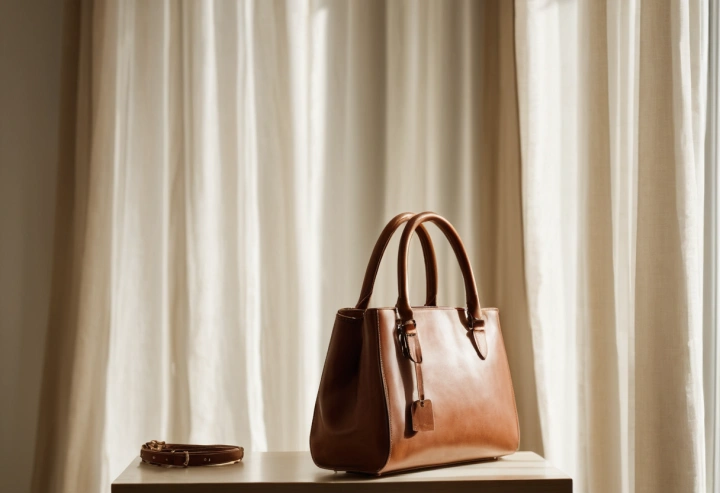
Handles are a separate case, and the darkening is not dirt in the usual sense. Skin oils, hand cream, sunscreen and friction combine to darken vegetable-tanned and untreated leather, especially pale tan and natural vachetta. This is patina. It is even, it deepens with wear, and it cannot be washed back to the original colour without stripping the leather.
What you can control is unevenness and grime:
- Wipe handles after a day out, particularly in summer, with a dry cloth to lift sunscreen and sweat before they settle.
- Clean the underside of the handles and the stitching, where residue collects and stiffens.
- Condition handles lightly and less often than the body, since they already receive oils from your hands.
- Rotate between bags so one pair of handles is not doing every school run, gym trip and commute.
- Wrap the handles in a soft cotton cloth or a plain scarf to slow the darkening on a pale bag you carry constantly.
Dark, glossy handles on a well-used tote look intentional. Sticky handles, or handles with a grey tide line where hands grip, mean residue rather than age, and gentle cleaning will help. Never use household wipes, alcohol or baby wipes on leather handles. They strip the finish and leave the leather thirsty.
Conditioning, sparingly and in the right weather
Conditioning replaces oils the leather has lost. It does not clean, waterproof, or fix scratches deeper than the surface. Over-conditioning is a more common mistake in the UAE than under-conditioning, because a bag kept in air conditioning feels dry to us and we assume the same of the leather.
Signs a tote needs it: the surface looks dull and flat rather than softly matte, it feels papery, and light flexing shows fine dry lines. If the leather still has a slight give and a low sheen, leave it alone.
Use a small amount of plain leather cream or balm, applied to a cloth first and never poured onto the bag. Test in an inconspicuous place, such as the base or an inside seam, and wait a day. Some creams darken pale leather permanently, which matters on a natural tan tote. Work in thin circles, let it sit for the time the product suggests, then buff off whatever has not absorbed. Anything left on the surface attracts dust and transfers to clothing.
Twice a year suits most totes in this climate, once before the humid coastal stretch and once when you bring the bag back into rotation. Suede, nubuck and patent do not take cream at all. Suede wants a brush and a protective spray made for it; patent wants a dry cloth and separation from anything that might stick to it in heat.
Rain, sea air and the occasional spill
UAE rain is rare and sudden, and a leather tote caught in a January downpour is recoverable. Blot, do not rub. Press a dry absorbent cloth onto the wet leather, lift, move to a dry part of the cloth, repeat. Rubbing pushes water into the grain and spreads the mark.
Empty the bag, stand it upright, and fill it loosely with plain unprinted paper or a clean towel so it holds its shape while drying. Keep it in a room with moving air, away from sunlight, radiators and hairdryers on warm. Fast drying makes leather go stiff and shrink. Slow drying, a day or so, usually leaves smooth leather looking much as it did. Water spots on untreated tan often fade as the leather dries evenly; if a faint outline remains, a light condition across the whole panel evens it out better than attacking the spot.
Coffee, juice and anything oily: blot immediately, then dab with a barely damp cloth. For oil, a small pile of cornflour or talc left on the mark for several hours draws some of it out, then brush it away. Salt from a coastal walk or a boat day leaves a white bloom; wipe with a barely damp cloth and dry slowly. Humidity itself is the quieter problem, and the habits that protect a shoulder bag apply here, which we go through in looking after a shoulder bag through the humid coastal months.
Putting a tote away between seasons
A tote stored badly for a few months comes out with a crease across the front panel and a lean it never had before. Empty it fully, clean inside and out, let it dry completely, then condition only if needed.
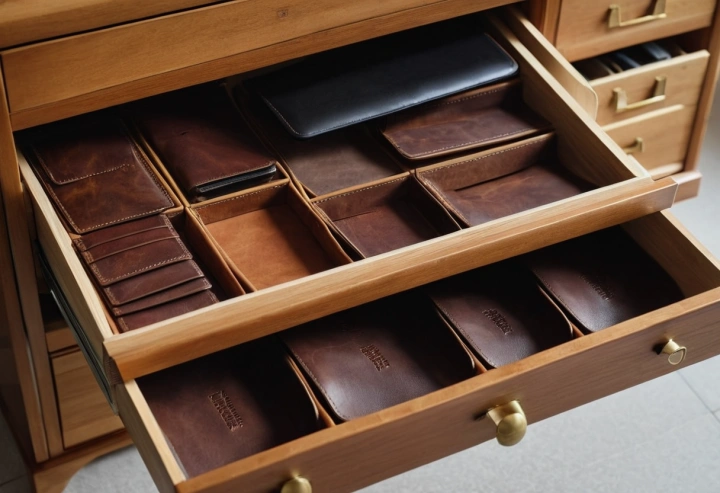
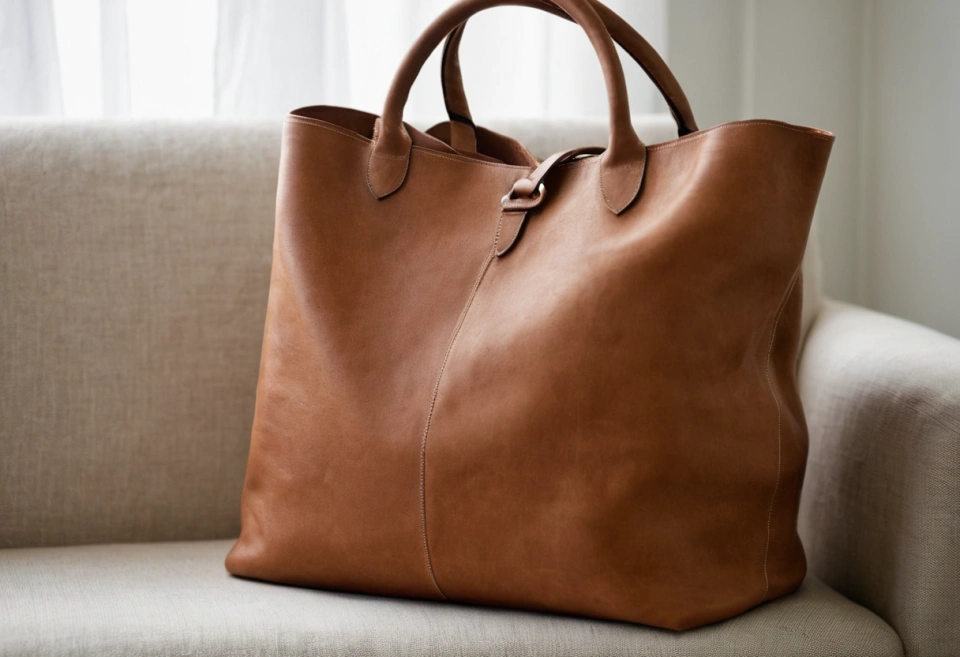
Fill it loosely. Enough plain acid-free paper or a bag pillow to support the sides and base, not so much that the panels bulge or the zip strains. Structured totes want their corners supported; soft slouchy totes should keep their relaxed shape rather than being forced upright. Stand the bag on its base on a shelf, with a hand’s width of air around it and nothing stacked on top. Handles rest inside or lie loosely alongside, not folded sharply and not hanging off a hook, which stretches them at the fixing points.
Cover with a breathable cotton bag or a clean pillowcase. Never plastic, never the sealed bag it came in, and never a wardrobe with no air movement against an outside wall. Tuck a silica gel sachet nearby, not touching the leather, and check the bag once during the season. Our notes on storing tote bags so they keep their shape go further into filling and shelving, and the wider guide to storing a handbag collection at home covers how much shelf space a rotation realistically needs.
Your next step
Take your most-used leather tote today, empty it completely, and spend a quarter of an hour on the lining and the underside of the handles. That single pass tells you more about the bag’s condition than any amount of looking at the front panel. Note whether the leather feels dry or merely dusty, then decide about conditioning. After that, choose one shelf with air around it, buy a couple of plain cotton covers, and give every tote you own a place to stand upright rather than a hook to hang from.
- Words
- Rail & Shelf editors
- Published
- Section
- Leather & Care
- Standards
- Editorial policy · Corrections